When something feels off, it usually is.

May 19, 2026

When something feels off, it usually is.

Dr. Ambreen Mohamed

Case Snapshot

A middle-aged woman presented to a virtual clinic with progressive shortness of breath and tachycardia.

At first glance, it would have been easy to attribute her symptoms to something more benign such as anxiety, deconditioning, or even a viral illness. But something felt off.

She appeared visibly uncomfortable.
Her heart rate was persistently elevated.
Her breathing appeared labored, even at rest.

No dramatic symptoms such as chest pain or collapse. She didn’t have a classic “textbook” presentation.

But her vitals and overall appearance did not match a reassuring story.

She was sent directly to the emergency department.

Further evaluation revealed the diagnosis:
Bilateral pulmonary embolism.

Diagnostic Lessons

Pulmonary embolism is one of those diagnoses that often hides in plain sight.

We’re taught to look for the classic features, sudden pleuritic chest pain, hemoptysis, acute dyspnea. But many patients, particularly women, present more subtly, with progressive shortness of breath, fatigue, or otherwise unexplained tachycardia. 

In this case, the most important clue was persistent tachycardia without a clear explanation. That’s not a benign abnormality. It’s a physiologic signal that something deeper may be wrong, and it should always prompt a pause before reassurance.

Equally important was how the patient looked. Even without a dramatic history, she appeared unwell. There is real value in clinical gestalt here. When a patient’s appearance and vitals don’t align with a reassuring narrative, that mismatch matters.

This is where pulmonary embolism is often missed. Not because we don’t know the diagnosis, but because it doesn’t always present dramatically. Many cases evolve over hours to days, not minutes, which can create a false sense of safety.

Risk stratification tools like Wells criteria and D-dimer can be helpful, but they are adjuncts, not replacements. Clinical judgment still sits at the center of decision-making, especially in outpatient settings where the threshold to escalate can feel less defined.

In this case, the decision to send her to the emergency department was not based on diagnostic certainty — it was based on clinical concern. And that distinction matters. Early escalation, even when the diagnosis isn’t confirmed, can be life-saving.

Clinical Takeaways

Pulmonary embolism remains a leading cause of preventable morbidity and mortality, and missed diagnoses are often tied to atypical or downplayed presentations.

This case serves as a reminder that:

And when something feels off, it’s worth acting on it

Not all high-risk pathology announces itself clearly

Unexplained tachycardia deserves respect

Back to PulsePoint Blog

Follow us for more perspectives and PulsePoint content from Heartbeat experts!
Identifying Early Risk in CAD Patients

April 14, 2024

Identifying early risk in CAD patients

Ambreen Mohamed

In this month’s PulsePoints case with Ambreen Mohamed, MD, FACC, a 52-year-old man came in with three weeks of chest pressure during exertion that was worse when climbing stairs, but relieved with rest.

He had multiple risk factors, but no prior cardiac diagnosis, and wasn’t on a statin. His ECG and troponin were normal, yet his symptoms pointed to an intermediate likelihood of coronary artery disease.

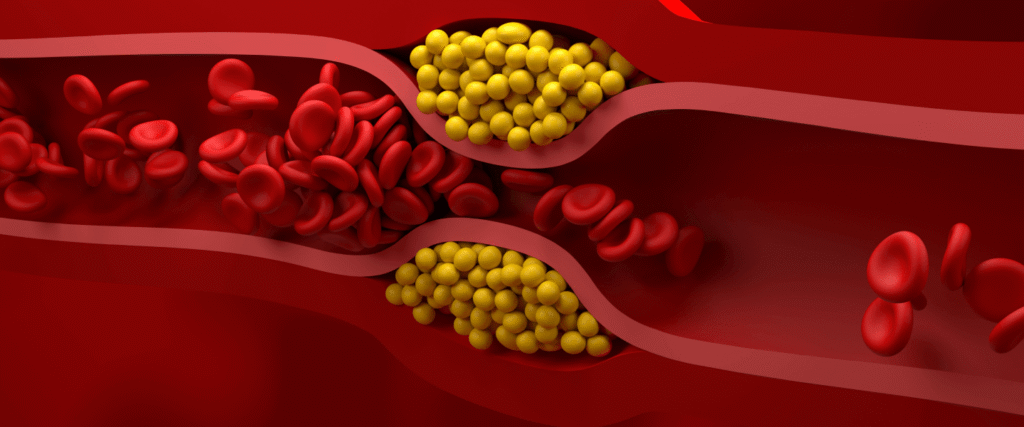
Instead of a traditional stress test, we chose Coronary CT Angiography (CTA) to look directly at plaque, not just infer ischemia. Results showed a 60–70% narrowing in the proximal LAD with high-risk plaque features, plus additional non-obstructive disease. FFR confirmed a significant lesion, and he underwent PCI with a drug-eluting stent.

With guideline-directed therapy, including a high-intensity statin, aspirin, and a P2Y12 inhibitor, his symptoms resolved and his functional capacity improved.

The bigger takeaway is that Coronary Disease often develops silently, long before a major event, and there is a real opportunity to detect it earlier and prevent it altogether.

Back to PulsePoint Blog

Follow us for more perspectives and PulsePoint content from Heartbeat experts!

Why PCSK9 Inhibitors work so well.

April 8, 2026

Why PCSK9 Inhibitors 
work so well.

Dr. Ambreen Mohamed

For many of our highest risk patients, especially those with premature disease, we should be asking: Are we satisfied with “better” or are we aiming for optimal?

In this PulsePoints case with Ambreen Mohamed, MD, FACC, a 49-year-old South Asian male came to us after a premature NSTEMI. He had diabetes, a strong family history of early heart disease, and a baseline LDL of 162 mg/dL.

We started high-intensity statin therapy and ezetimibe, alongside lifestyle changes, and his LDL came down to 82 mg/dL.

By older standards, this is a sufficient decrease, but by current secondary prevention standards and when aiming for optimal, it falls short.
Given high-risk status, our LDL goal was below 55 mg/dL. So, we added a PCSK9 inhibitor evolocumab. 12 weeks later, his LDL dropped to 28 mg/dL, with no side effects, causing the patient to feel empowered.

PCSK9 inhibitors are an optimal solution because they are a protein that binds LDL receptors in the liver and marks them for destruction, delivering 50 to 60% additional LDL reduction on top of statins.

High-intensity statin plus ezetimibe is not the ceiling in very high-risk patients. If LDL remains above goal, PCSK9 inhibitors are not extreme. They are evidence-based. The combination of aggressive lipid lowering and lifestyle intervention is powerful, especially in populations at high risk.

Back to PulsePoint Blog

Follow us for more perspectives and PulsePoint content from Heartbeat experts!
We are advancing access to high-quality cardiovascular care for all.

May 6, 2026

We are advancing access to 
high-quality cardiovascular care for all.

Uncontrolled hypertension is a major contributor to preventable cardiovascular events, and Black communities are disproportionately affected.

This month’s PulsePoints case with Dr. Ambreen Mohamed, MD, FACC follows a middle-aged African American man with long-standing, poorly controlled hypertension — placing him at high risk for stroke, heart failure, and kidney disease.

Using a step-by-step, patient-centered approach, the care team:
✅ Optimized medication selection and dosing
✅ Addressed adherence and side effects
✅ Focused on sodium reduction, sleep, stress, and physical activity
✅ Emphasized consistent home blood pressure monitoring

By taking these steps, his numbers gradually decreased and he reached his target blood pressure.

During Black History Month, this case is a reminder that equity in cardiovascular care is not just about awareness, it’s about action – listening closely, individualizing treatment, and ensuring every patient has the necessary tools and support to succeed.

Back to PulsePoint Blog

Follow us for more perspectives and PulsePoint content from Heartbeat experts!