ACO REACH: A New Evolution in At-Risk Primary Care

The History

The first recorded mention of the term “Accountable Care Organization” was by Dr. Elliott Fisher during a 2006 public meeting with the Medicare Payment Advisory Committee (MedPAC). 

Then, six years later in 2012, The Patient Protection and Affordable Care Act (ACA) authorized the use of Accountable Care Organizations (ACOs) to improve the safety and quality of care and reduce health care costs in Medicare. ACOs are defined as groups of doctors and other healthcare providers who come together voluntarily to give coordinated high-quality care to their Medicare patients. They matter because their member bases are growing fast, and they’re driving both better outcomes and lower costs.

As of January 2022, there are 483 Medicare ACOs serving over 11 million beneficiaries across the country (per the National Associations of ACOs). There are many flavors of ACOs — including hospital-based ACOs, independent ACOs that offer what tends to be called “facility-based primary care” (that is, they build and run their own centers), and “over the top” players such as Aledade, Evolent, and Privia that collaborate with existing independent primary care practices. This network dynamic from Aledade et al enables independent practices to participate in the ACO model when otherwise they probably would or could not.

These days, it’s significant that The Center for Medicare and Medicaid Innovation has clearly expressed that they want every Medicare beneficiary in an accountable care plan by 2030. And their newest program, called ACO Reach, has attracted hundreds of applicants, as CMS seeks to ensure historically underserved patients are fully included.

Primary and Speciality Collaboration

Over especially the last two decades, primary care in America has been limited in what it can or will do in regards to specialty care, such as for categories such as kidney, cardiovascular or GI. But now, given the economic incentives that are baked into the ACO model, along with the rise of advanced diagnostic devices, the specialty line in American primary care is being redrawn much higher – that is, the lower ~40% of acuity in any specialty such as cardiovascular disease will be addressed in the ACO, and only the top ~60% of acuity will be referred out to specialists. 

This has led to a “hub & spoke” effect – the idea is that ACOs employ advanced diagnostics and curated clinical data to identify gaps in care. In cardiology, that diagnostic is commonly a cardiovascular echo. What happens next is a partner such as Heartbeat Health conducts a same day read, and if the patient has low-to-moderate cardiovascular disease (CVD), the ACO typically keeps the patient and treats their heart issues face-to-face. If the patient has high-to-acute CVD, the spoke is invoked – the patient is referred to, as an example, virtual cardiology team for ongoing heart care, given the convenience that virtual visits represent for the patient. This “hub & spoke” effect is transforming how primary care tied seamlessly to speciality care work together across disciplines.

The ACO REACH Model

To make matters more nuanced, the new ACO REACH model is now here. REACH stands for Realizing Equity, Access, and Community Health. It replaces the Global and Professional Direct Contracting (GPDC) Model. The GPDC was launched during the Trump administration, with the aim of allowing traditional and non-traditional risk-bearing entities to take on risk for lives across an entire market beyond the normal attribution method for other ACO models.

A major focus of the Biden administration’s ACO REACH program is health equity. A new benchmark adjustment prominent in the REACH rubric is to positively incentivize ACOs covering underserved communities and beneficiaries — or at least avoid inadvertently penalizing them for doing so.
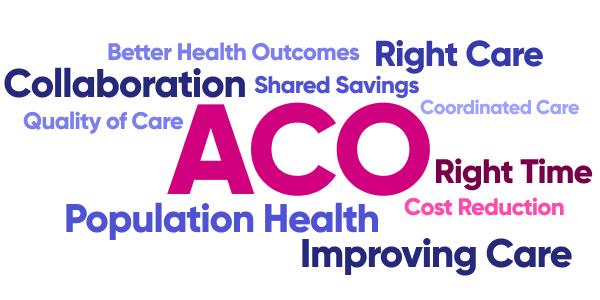

The ACO REACH Model accepted applications in April 2022, and will officially launch next year, likely with known players from the ACO and GPDC realm, and new organizations as well.

All ACOs in the REACH model will have to develop a plan for how they will identify health disparities in their respective communities and then take specific actions to address those disparities. This is a requirement that does not exist currently in Medicare. 

Virtual models will also be key in regards to health equity. Medicare patients have proved far more facile with video visits and HIPAA-compliant texting than prognosticators imagined, especially when no smartphone app is required. Since there’s increasingly appreciated “value in the visit,” web and mobile web video encounters appear to be especially effective with seniors, and lead to a level of appointment adherence far greater than what is seen in the face-to-face model.

Patients in ACO REACH – and other ACO models – actually receive more benefits than those in traditional Medicare. Broad use of telehealth is very much allowed, as is the waiving of a requirement for a three-day inpatient hospital stay before an admission to a skilled nursing facility. Patients can receive cost-sharing support to help with copays, as well as rewards for managing their chronic diseases. REACH also allows much more generous use of home visits after patients leave the hospital.

This home visit component is important, because the “Last Mile” is being paved at a rapid rate in America, whereby a nurse with advanced diagnostics can get to the patient’s home in a growing set of major markets in less than 4 hours. Then, the visiting nurse can stream diagnostic data in real time to relevant providers, typically specialists. Prominent “Last Mile” firms include Dispatch Health, Medically Home, MyNexus (owned by Anthem), OneHome (owned by Humana), Livio (owned by Blue Cross of Minnesota) and Emcara (owned by Florida Blue). And there are many dozens more.

The hub for any ACO, traditional or the new ACO REACH model, appears to be face-to-face primary care. The spokes, however, are likely to be increasingly virtual as a function of patient convenience and achieving lower costs of care. And the recasting of the specialty line will mean “V1Cs” (Virtual-First Care companies, as named by the Virtual First Medical Practice Collaboration) are operating in every specialty, representing a rich menu of choices for ACO and ACO REACH players alike.

Back to PulsePoint Blog

Follow us for more perspectives and PulsePoint content from Heartbeat experts!
Why Protecting Patient Data is the Best Decision Your Growing Company Can Make this Year

An in-depth look at our business case for SOC 2® compliance.

The risks of mishandling user data are increasing constantly. Cyberthreats are growing in sophistication and prevalence every year, and international regulatory bodies are demanding more stringent controls to ensure sensitive information is transmitted, stored, and leveraged in a manner that prevents it from being lost, leaked, adulterated, or misused. As part of our commitment to data security, in 2022, Heartbeat Health obtained SOC 2® certification, a standard developed by the American Institute of CPAs and one of the most respected and comprehensive security frameworks today. It verifies that our digital security practices are consistent, auditable, repeatable, and in line with the most rigorous standards for protecting data. Heartbeat is growing quickly and we are helping some of the largest healthcare companies reduce their spend on cardiac care while improving outcomes — but we are equally aware that the trust of our partners and patients is dependent upon systematically protecting their data.

The decision that everyone puts off

We take our users’ clinical data seriously. At Heartbeat, we already adhere to the Health Insurance Portability and Accountability Act (HIPAA) developed by the U.S. Department of Health and Human Services (HHS) to protect the security and privacy of health information in addition to many other regulatory requirements associated with virtual first clinical care. Most certifications and security frameworks share or have overlapping controls, so we began SOC 2® certification with the assumption that we would not need to start the process from scratch. A common misconception is that teams should wait or that they need to be a certain size before they take on the certification process due to the time commitment. The truth is that it is easier to start formalizing your compliance approach as soon as your product roadmap has stabilized and before going into a growth phase. Furthermore, the process changes necessary to support a new level of compliance are easier to roll out when a team is smaller.

We’ll trust you after you fill out this survey

With so many embarrassing and damaging data breaches making headlines these days, users and organizations of all types are justifiably concerned about the safety of their data. They need good evidence that they are entrusting it to parties that will safeguard it appropriately. The standard process for new payer and digital health clients involves completing a survey describing the compliance program and security safeguards that are in place, which provides assurances that customer data will be well managed. These questionnaires are time consuming and can require a bit of back and forth until both security teams are aligned on risk. In order to short circuit this process, we have found that most of the questions and concerns in a risk survey are covered by our SOC 2® Type 2 report. We still get questionnaires from prospective clients, but it helps move the conversation forward to focus on scope and terms instead of getting held up in a security review. This can save weeks to months on a sales process, which should help prove the case that it’s wise to make this investment in security as early as possible!

Compliance is a team sport

Many of the members of our leadership team, as well as many of our engineers and contractors, come from a health care tech background and have deep experience achieving certifications and working in a heavily regulated environment. In addition to leveraging the crosswalk of best practices from HIPAA, we were able to rely on the fact that a lot of the expected controls were already designed into our platform and we had existing processes in place that would meet control guidelines.  We also enlisted the help of a contracted Chief Information Security Officer, a compliance platform, and an audit partner. Vanta is a software service that helps automate and manage compliance for a number of different certifications. It connects to our cloud providers, project management, human resource systems, and other workflow tools. If you already meet a control or have a gap, a platform like Vanta rapidly identifies issues in need of remediation. Helping internal teams understand the importance of compliance brings security to the forefront and asks everyone to do their part.

Risk mitigation and security at Heartbeat

Recently, cybercriminals announced they had successfully breached both Microsoft and Okta, a widely used identity management platform that helps organizations prevent unauthorized access from digital intruders. Heartbeat was well prepared to respond to these hacks thanks to our ability to track and document issues as they were announced. With the processes in place to support our SOC 2® controls, we were protected from these public attacks by having best practices in place. As a growing company that relies on third party vendors to support technical and operational work, having plans around disaster recovery and steps to proactively mitigate risk using multi-factor authentication and limiting access are absolutely essential. Also, ensuring that every vendor is well vetted is an important practice that SOC 2® helps enforce. No company is safe from a breach or hack as threats can come from anywhere and are constantly evolving. However, having steps documented and tested in preparation for these types of events helps manage risks proactively and limit the impact of exposure to a security incident.

Development process and velocity

We are proud of the work that we do at Heartbeat and the platform that we have built to care for our patients. Enterprise companies put a lot of trust in us, and hitting this milestone is a testament to the diligence and care that we put into building our software and operational processes. Achieving SOC 2® certification is just a starting point. Renewing our certification is a recurring exercise and an opportunity to build on a strong foundation for risk management and data security. We were also mindful about not impacting our product or development velocity by introducing new policies and requirements for our teams too quickly and we counter that prospect by focusing on automation wherever possible. We brought in third party security firms to test our security, prove that our system is resilient, and remove avoidable bias from the process of penetration and vulnerability testing. The added assurances that we have implemented during our last audit period are now baked into the development process. Our teams are more productive and save time during architectural planning because the risks are managed. 

We are already well into our next audit period, expanding our compliance programs, and continuing to raise the bar. The valuable and sensitive digital assets we are entrusted with are always at great peril because the risks of a cyberattack or other data disaster are sadly more elevated than ever before — which is why we pledge to continually invest in transparently building and deploying security programs that meet and exceed industry standards and keep our data where it belongs: in the hands of patients and providers to enable a new generation of digital healthcare.

Back to PulsePoint Blog

Follow us for more perspectives and PulsePoint content from Heartbeat experts!

Nayan Jain
Nayan Jain
Founder & EVP, Solutions, Heartbeat Health

How Virtual-First Cardiology is Reshaping the Patient Experience

“Doc, your patient is here,” said one of the clinical staff members.

We were closing up for the day when my patient arrived over an hour late. He moved slowly and leaned into his cane as if it would split at any moment, looking exhausted.

He sat down apologetically to explain the taxing journey that he had taken to get to the clinic that day—a half mile walk to the bus stop to catch the 106, only to hop off and onto the 44 and then the 52.

I looked down at the reason for the visit: “blood pressure check.”

That was seven years ago. When I think back to that moment, I realize I knew even then how unjust and illogical it was to put our patients in situations like that. It was the comfortable model we were accustomed to, one that a fee for service structure caters to, but there was clearly a better way. Now, several years into Heartbeat Health’s experience, it is evident that a Virtual-First approach is the exact solution that we needed all along.

So what exactly is Virtual-First cardiology and how is it helping healthcare providers avoid issues like my clinic patient faced? It is specialty cardiac care that leverages data, device connectivity and clinicians to deliver on-demand cardiovascular services. It’s data-driven care connected not to a location but to the patient, able to serve them just as effectively remotely as in person. These elements serve as the foundation for care delivery — rather than the face to face experience that anchors traditional healthcare settings. 

At Heartbeat, our collective experience over the last several years proves that this model is an optimal fit for a very wide range of cardiovascular conditions. In the ‘healthiest’ of cardiac populations, those who have not yet developed cardiovascular disease but who are at moderate to high risk of it, Virtual-First care allows them to meet a cardiologist from the comfort of their home on their phone or at their computer. Patients get engaged, educated, and involved with preventative measures such as statin therapy and lifestyle changes that may add years to their lives.

For the sickest of cardiac patients, those who are leaving the hospital with advanced heart failure or who just had a heart attack, Virtual-First cardiology enables frequent virtual visits driven by AI-driven algorithms which identify the most pressing risks. That prioritization model is then complemented by daily remote monitoring and ongoing care milestones. Among our historical patient panel, we have already observed 70% and 33% reductions in cardiac and all-cause readmission, respectively, with this approach.

Given the barriers that some face, such as the need for translation services or access to a laptop or WiFi, there are concerns that Virtual-First care will exacerbate the digital divide. However, thanks to the rapid pace of technological growth, many of those obstacles to accessing virtual treatment are rapidly disappearing. Furthermore, modern telemedicine, when done correctly and intentionally, takes those issues into account and systematically improves access to treatment.

For example, Heartbeat offers platform-agnostic mobile access with translator services to extend the reach of Virtual-First care. For patients without easy access, we work closely with family members, nurses, and medical assistants who can facilitate virtual visits. And for patients that still struggle to connect with us, we embed in brick and mortar PCP offices and offer services via mobile devices and digital tablets. This allows patients to reap the benefit of a high impact health visit with coordinated care between their central physician and a specialist. 

Our approach represents a massive upgrade in the patient experience away from outdated, time consuming, expensive, one-size-fits-all care to a model that is significantly more efficient, convenient, and personalized.

It would be inaccurate to say that Virtual-First care will replace all face to face care. As physicians, we know the value of placing a hand on someone’s calf, detecting a subtle drop in body temperature, and knowing that they have decompensated into a low output cardiogenic shock. Yet, not every patient or situation requires in person care — and those visits can be avoidably wasteful in time, effort, and cost. That’s why Virtual-First care is the perfect complement to face to face visits; it emphasizes low-cost, easy and early access options which cater to most cardiac patients.

Virtual-First care also prioritizes medical management first, now thematic in most ACC/AHA guidelines, rather than a procedure-first approach. It allows for early recognition of organ system failure as the result of a disease’s progression so that we can more proactively prioritize those who need escalation in care.

As a practicing Virtual-cardiologist at Heartbeat, almost every day I think back to that patient who struggled to take three buses to our clinic in Philadelphia just for a routine blood pressure check. I often wonder how things would have been different had that patient been in our Virtual-First care model today. The answer is clear, and it keeps me and our growing team motivated every day to evolve our company and our model so that it extends to the greatest number of people that can benefit from it.

Back to PulsePoint Blog

Follow us for more perspectives and PulsePoint content from Heartbeat experts!

Jana Goldberg, MD
VP of Clinical Services & National Medical Director, Heartbeat Health